Why Office HVAC Maintenance Is Essential for Buildings
Why Office Buildings Need Constant HVAC Maintenance
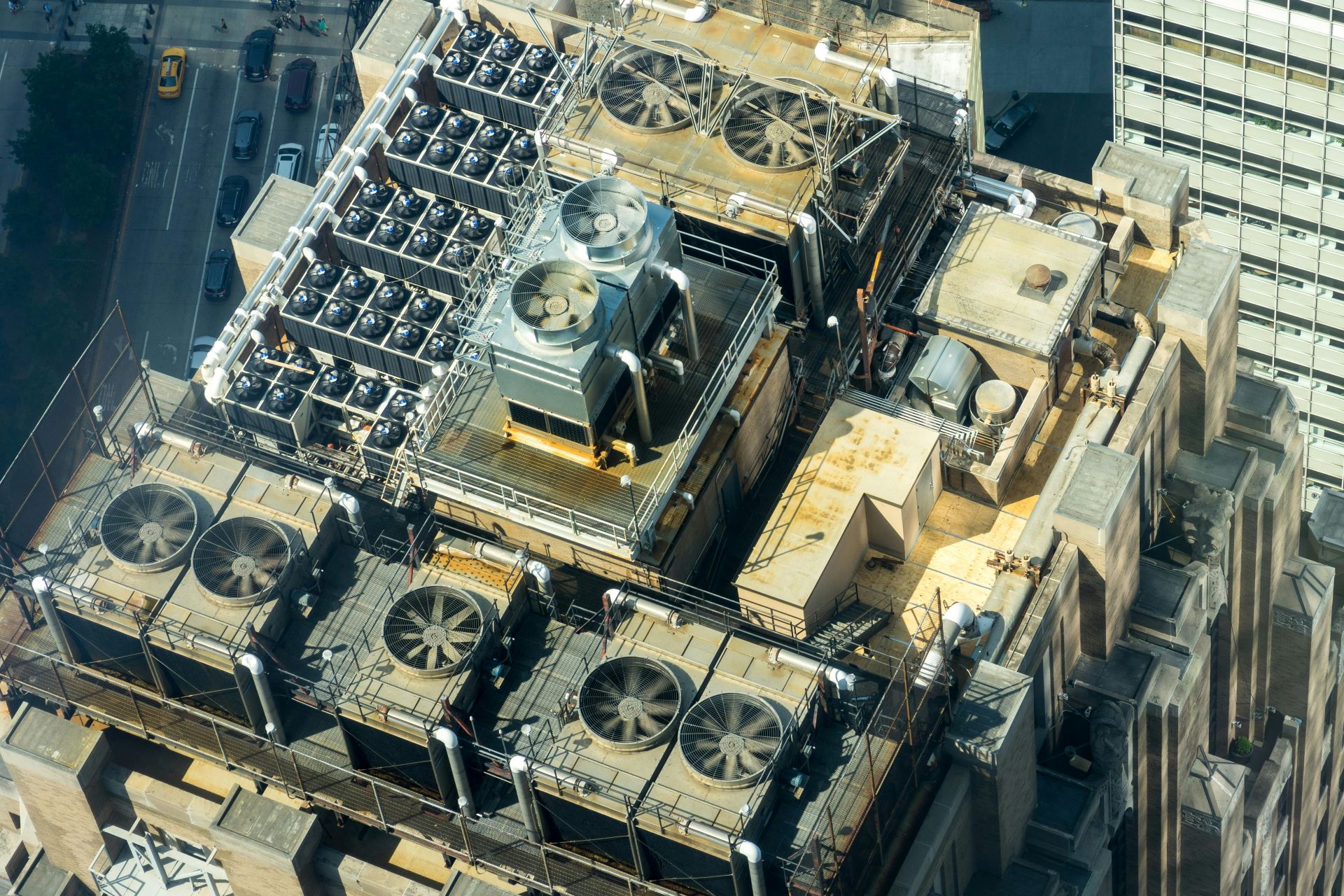
The Invisible Engine Behind Every Office Building
Walk into a modern office building in Johannesburg and you rarely think about what makes the environment feel “just right.” The steady hum of conditioned air, the subtle balance between temperature and humidity, and the absence of outdoor dust or heat all feel effortless. But behind that comfort is a system working without pause: HVAC.
Heating, ventilation, and air conditioning systems are the invisible engine rooms of commercial buildings. In South Africa’s office environments, especially in urban centres like Johannesburg, Sandton, Pretoria, and Cape Town, HVAC systems are not luxury add-ons. They are operational necessities that allow businesses to function productively in climates that can swing from intense summer heat to cold winter mornings.
Unlike lighting or office equipment that can be switched off after hours, HVAC systems rarely stop. Even when a building is “empty,” air circulation, humidity control, and baseline temperature regulation often continue. This constant operation makes HVAC one of the most stressed mechanical systems in any building.
Without continuous maintenance, this invisible engine begins to strain, degrade, and eventually fail in ways that are both disruptive and expensive. What starts as a small inefficiency can quickly become a system-wide breakdown affecting productivity, tenant satisfaction, and long-term building value.
In South Africa’s commercial property sector, where energy costs are rising and grid reliability can fluctuate, HVAC maintenance is not just technical housekeeping. It is a strategic investment in operational resilience.
Why HVAC Systems Never Really Rest
Unlike most building systems, HVAC infrastructure is designed to maintain equilibrium rather than operate on demand alone. Even when occupants leave, systems often continue cycling air to prevent stagnation, moisture buildup, and temperature swings that can damage interiors and sensitive equipment.
In office towers, shopping centres, and mixed-use developments, HVAC systems are integrated into the building’s core logic. They respond to external weather conditions, internal heat loads from computers and lighting, and even occupancy patterns detected by sensors.
This continuous responsiveness is precisely why maintenance becomes critical. A system that runs intermittently might forgive minor inefficiencies. A system that runs continuously amplifies them.
A slightly clogged filter, for example, does not simply reduce airflow. It forces fans to work harder around the clock. A small refrigerant imbalance does not just reduce cooling efficiency; it compounds energy consumption every hour of operation. Over weeks and months, these small inefficiencies accumulate into significant mechanical strain.
In South Africa, where commercial buildings often operate extended hours due to flexible working arrangements and shared tenancy models, HVAC systems are under near-constant load. Add seasonal temperature extremes, and the demand becomes even more pronounced.
This is why HVAC maintenance is not a reactive activity. It is a continuous lifecycle process that ensures systems remain stable under uninterrupted pressure.
Energy Efficiency and the South African Reality
Energy efficiency is no longer an optional performance metric for office buildings in South Africa. It is a survival requirement.
With rising electricity tariffs and ongoing pressure on the national grid, inefficient HVAC systems can quietly become one of the largest contributors to operational costs in commercial properties. In many office buildings, HVAC accounts for a significant portion of total energy consumption, often rivaling lighting and IT infrastructure combined.
When systems are poorly maintained, energy waste increases dramatically. Dirty coils reduce heat exchange efficiency. Blocked filters restrict airflow. Worn belts and misaligned fans increase mechanical resistance. Each of these issues forces the system to draw more power just to achieve the same output.
In practical terms, this means a building that should be comfortably cooled at a stable cost suddenly begins consuming far more electricity for less effective performance. Tenants feel it as uneven temperatures. Building managers see it in rising utility bills.
South Africa’s climate intensifies this challenge. Johannesburg’s highveld summers bring strong heat loads, while winter mornings require steady heating or temperature moderation. Cape Town introduces its own complexity with humidity and coastal air corrosion factors. In every region, HVAC systems must constantly adjust, and inefficiency multiplies quickly when maintenance is neglected.
A well-maintained HVAC system, by contrast, behaves like a disciplined athlete. It uses only the energy it needs, responds smoothly to environmental changes, and avoids unnecessary strain. Over time, this translates into measurable cost savings and improved sustainability performance for the building.
Air Quality as a Hidden Performance Factor
Air quality in office buildings is often underestimated because it is invisible. Yet it directly affects cognitive performance, employee wellbeing, and even absenteeism rates.
HVAC systems are responsible for filtering airborne particles, regulating humidity, and ensuring a consistent supply of fresh air. When these systems are not maintained, air quality deteriorates in subtle but impactful ways.
Dust accumulation inside ducts can circulate through office spaces. Moisture imbalance can create conditions for mould growth. Poor filtration can allow pollutants from outdoor traffic or construction sites to enter indoor environments. In dense urban areas like Sandton or the Johannesburg CBD, this is particularly relevant due to constant construction activity and traffic emissions.
Over time, occupants may not consciously identify HVAC issues as the cause of discomfort. Instead, they report symptoms such as fatigue, headaches, dry eyes, or general dissatisfaction with indoor conditions. This phenomenon, often referred to as “sick building syndrome,” is frequently linked to inadequate ventilation and poor HVAC upkeep.
Maintenance plays a direct role in preventing these issues. Regular filter replacement, duct cleaning, and system calibration ensure that air is continuously refreshed and purified at the correct rate. Even small maintenance lapses can reduce airflow quality significantly.
In modern office environments where tenant experience is a key competitive differentiator, air quality becomes part of the building’s value proposition. Clean, stable air is no longer just a comfort feature. It is part of the operational identity of the space.
Mechanical Wear: The Slow Drift Toward Breakdown
HVAC systems rarely fail suddenly without warning. More often, they degrade slowly over time, sending subtle signals that are easy to overlook until a major failure occurs.
Continuous operation means that every component, from compressors and fans to belts and sensors, is under constant mechanical stress. Without maintenance, wear accelerates unevenly across the system.
For example, a slightly misaligned fan blade may introduce vibration. That vibration travels through the system, loosening fittings and increasing strain on bearings. A failing sensor might cause incorrect temperature regulation, forcing the system to cycle more frequently than necessary.
In office buildings, these small mechanical issues can escalate into system-wide inefficiencies. What begins as a minor performance dip becomes a full breakdown requiring emergency repair or even partial system replacement.
In South Africa’s commercial property environment, emergency HVAC repairs are particularly disruptive. Downtime can affect tenants, interrupt business operations, and in extreme cases, damage sensitive equipment such as servers or medical devices housed within office complexes.
Preventive maintenance is therefore not just about extending equipment lifespan. It is about controlling risk. A well-maintained system is predictable. A neglected system is volatile.
The Role of Preventive Maintenance Systems
Preventive maintenance is the structured approach to keeping HVAC systems in optimal condition before problems arise. It involves scheduled inspections, cleaning cycles, performance testing, and component replacement based on usage patterns rather than failure events.
In large office buildings, preventive maintenance typically includes monitoring airflow rates, checking refrigerant levels, inspecting duct integrity, and ensuring that control systems are properly calibrated.
While the technical details vary depending on building size and system complexity, the principle remains consistent: fix small issues before they become large failures.
In South Africa, preventive maintenance is particularly important due to environmental factors such as dust levels, seasonal pollen, and urban pollution. These external conditions accelerate filter clogging and system contamination compared to more temperate environments.
A structured maintenance schedule also helps building managers plan costs more effectively. Instead of unpredictable emergency expenses, maintenance becomes a predictable operational budget item.
Over time, this shifts HVAC from being a reactive burden to a managed asset.
Indoor Comfort and Tenant Expectations
Modern office tenants expect more than just space. They expect comfort, stability, and reliability. HVAC performance plays a central role in shaping that experience.
Temperature inconsistency is one of the most common complaints in commercial buildings. One floor feels too warm, another too cold, and meeting rooms fluctuate depending on occupancy. These inconsistencies are often not design flaws but maintenance issues.
When HVAC systems are properly maintained, air distribution becomes balanced. Sensors respond accurately. Airflow remains consistent across zones. The building feels unified rather than fragmented.
In competitive office markets like Johannesburg and Cape Town, tenant retention is closely linked to building experience. A well-maintained HVAC system contributes directly to tenant satisfaction, reducing vacancy risk and improving long-term lease stability.
Comfort is not just physical. It is psychological. When occupants feel that a building “works properly,” they are more likely to associate it with professionalism and reliability.
Seasonal Stress and Climate Challenges in South Africa
South Africa’s climate diversity places unique demands on HVAC systems. Johannesburg experiences high altitude weather patterns with sharp seasonal contrasts. Summers are hot with afternoon thunderstorms, while winters can be unexpectedly cold.
Cape Town introduces coastal humidity and salt air exposure, which can accelerate corrosion in mechanical components. Durban adds another layer with high humidity and warm temperatures that demand constant dehumidification.
These environmental conditions mean HVAC systems rarely operate in stable conditions. Instead, they continuously adjust to changing external pressures.
Without maintenance, these adjustments become inefficient. Systems overcompensate, cycle too frequently, or fail to regulate humidity effectively. This leads to increased energy consumption and reduced system lifespan.
Maintenance ensures that systems remain calibrated to local environmental realities rather than operating on default settings that may no longer be optimal.
Common Maintenance Failures in Office Buildings
Many HVAC issues in commercial buildings stem not from design flaws but from neglect.
One common issue is delayed filter replacement. When filters become clogged, airflow is restricted and system pressure increases. Another frequent problem is neglected duct cleaning, which allows dust accumulation and reduces air quality.
Sensor drift is another subtle but impactful issue. Over time, temperature and humidity sensors lose calibration accuracy, leading to inefficient system responses.
In some cases, maintenance contracts exist but are not properly executed. Inspections are performed superficially without deeper system diagnostics, allowing hidden issues to persist.
These failures are rarely dramatic at first. They build slowly, like sediment accumulating in a pipe, until the system eventually becomes inefficient or unstable.
Building Longevity and Asset Value
An office building is not just a structure. It is a long-term financial asset. HVAC systems play a major role in determining that asset’s operational lifespan and market value.
Poor HVAC maintenance accelerates wear on internal building components. Excess humidity can damage ceilings and finishes. Poor airflow can contribute to uneven thermal expansion in materials. Over time, these issues reduce the overall condition of the building.
Well-maintained HVAC systems, on the other hand, protect the internal environment. They regulate moisture, stabilise temperature, and reduce strain on other mechanical systems.
For property owners and facility managers, this translates into higher asset value, improved tenant retention, and reduced capital expenditure over time.
The Strategic Importance of HVAC Maintenance
HVAC maintenance should not be viewed as a cost centre. It is a strategic function that supports building performance, tenant satisfaction, and financial stability.
In South Africa’s evolving commercial property landscape, where energy efficiency, sustainability, and operational resilience are becoming key differentiators, HVAC systems sit at the centre of building intelligence.
A neglected system quietly erodes value. A well-maintained system quietly creates it.
The System That Never Stops Giving, or Failing
Office HVAC systems are among the most hardworking components of any building. They operate continuously, adapt constantly, and respond to both human and environmental demands without pause.
This constant operation is both their strength and their vulnerability. Without maintenance, small inefficiencies multiply into large failures. With maintenance, they become reliable, efficient, and quietly essential to modern office life.
In South Africa’s commercial buildings, where climate, cost, and reliability all intersect, HVAC maintenance is not optional. It is foundational.
The comfort of every meeting room, the productivity of every workstation, and the longevity of every building quietly depend on it.